Rising, falling and reset thresholds


|
Rising, falling and reset thresholds |
|
|
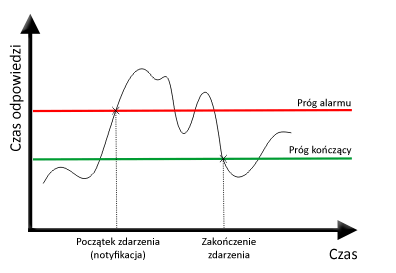
For most events, you define a threshold value that determines when the event is generated. For example, for a service, it determines how slowly the service can respond before the event is generated. For some events, you also need to define a "reset" threshold. It prevents the event from being generated every time the event condition is met, which would generate an alert every few minutes. The measured value must first fall below the reset threshold before the next alert is generated. The red line shows the alert threshold – when the response time (or percentage of lost packets) of a service or the value of a performance counter exceeds it, an alert is generated. The next alert, however, is generated only after the value falls below the reset threshold. This prevents the alert from being generated cyclically for one event.
Rising and falling thresholds The threshold described above is called a rising threshold, because it generates an alert when the measured value exceeds it. You can also define an event for a situation in which the measured value should stay above the threshold. The alert is then generated when the value falls below the alert threshold, so this type of threshold is called a falling threshold. Important! For rising thresholds, the reset threshold cannot be higher than the alert threshold; for falling thresholds, it cannot be lower than the alert threshold. |